

We live in a time when information is everywhere. Answers arrive in seconds, artificial intelligence can summarise almost anything, and technology can increasingly anticipate what we may need next. Yet one deeply human problem remains: knowing what to do with everything we know.
For Priti Solanki, that gap between information and clarity has become central to her work.
With more than sixteen years of experience across software engineering, backend architecture, cloud transformation, AI solution architecture, product leadership, and team development, Priti has spent much of her career solving complex problems. Today, Priti Solanki as the Founder of Purplespot.ink, Creator of Ahavibes, AI Solution Architect, and Leadership Decision Coach, she is applying that experience to a broader question: how can technology help people think better without thinking for them?
Her philosophy is simple. Technology should make people more capable, not more dependent on systems.
From Building Systems to Understanding People
Priti Solanki began her career in software engineering, learning to turn complex requirements into systems people could rely on. Her work later expanded into enterprise technology, cloud transformation, AI architecture, product development, and leadership.
A significant shift came while leading enterprise AI initiatives. She saw how technology could save time and support better decisions, but also learned that successful adoption depended on more than technical capability. Trust, context, and human judgement mattered just as much.
Then came a more personal realisation.
During a difficult period in her professional and personal life, Priti turned to journaling to understand why certain thoughts and reactions kept repeating. Writing helped her express what she was experiencing, but it did not necessarily change how she understood it.
That distinction stayed with her.
People can have plenty of information and still struggle to find clarity. Priti began wondering whether the same discipline used to examine complex technical systems could also help people examine the way they think.
It became the beginning of a new direction.
Discovering the Mental Clarity Gap
For Priti Solanki , mental clarity is not simply about feeling calm. It is about separating what actually happened from the meaning we attach to it.
She found that journaling could sometimes reinforce an existing interpretation rather than challenge it. The shift came when she began separating an event from her interpretation, examining the available evidence, identifying what remained unknown, and deciding how she wanted to respond.
She began seeing the same pattern at work.
People were often not struggling because they lacked intelligence or commitment. They were dealing with unresolved conversations, ambiguous feedback, competing priorities, and assumptions about what others expected from them. Under pressure, an interpretation could gradually start feeling like a fact.
That could affect relationships, focus, decisions, and everyday work.
Priti decided to approach the problem with the same discipline she had applied to complex technical systems: slow down, examine the inputs, question assumptions, and understand what is actually known.
Technology Meets Human Thinking
Priti Solanki’s technology background continues to shape the way she approaches human thinking.
Software engineering taught her to examine inputs, assumptions, feedback loops, and failure conditions. Human beings are obviously more complicated than software, but the habit of asking precise questions remains useful:
What was actually observed?
What meaning was added?
What information is missing?
Her experience with AI added another layer to this thinking. AI systems can produce answers that sound confident without necessarily being correct. Our own thoughts can work similarly. A thought can feel convincing because it carries emotional weight, not because the evidence supports it.
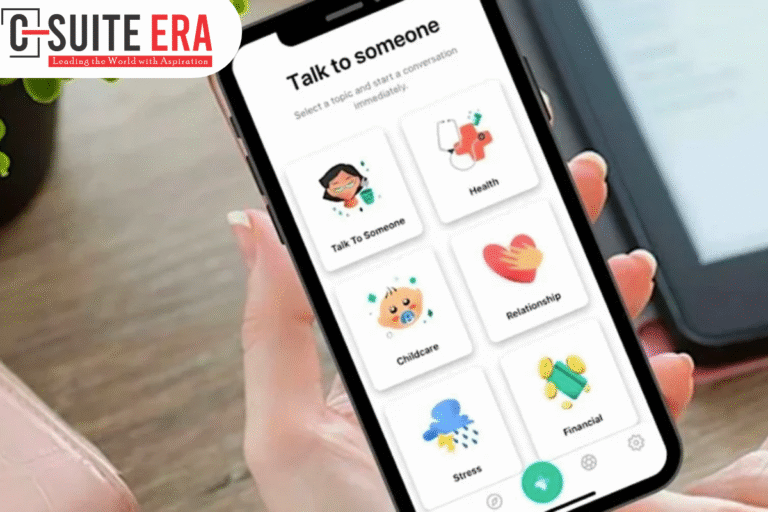
This became one of the foundations of Ahavibes, a responsible AI product designed to support structured thinking and self-reflection while keeping the user in control.
Leading AI Initiatives at a Public Charter School in NY
Priti Solanki work with AI has also extended beyond product development into practical implementation in educational environments.
While leading AI initiatives at a public charter school in New York, she saw the importance of introducing emerging technology with clear purpose rather than simply adopting it because it was new.
Her approach begins with the problem. What needs to improve? Where can technology genuinely help? What should remain a human responsibility?
The same thinking has shaped her broader work in AI architecture. Rather than beginning with a model, Priti begins with the user’s actual friction, maps the workflow, identifies where AI adds value, and considers issues such as human review, privacy, reliability, data access, and measurable outcomes.
Her enterprise work has contributed to solutions that saved approximately 75,000 hours and helped secure $65,000 in AWS credits for experimentation and scale.
For Priti, however, efficiency is only part of the equation.
A useful AI system must also be understandable, trustworthy, and appropriately governed. She believes responsible AI should be considered while a product is being designed, not treated as a compliance exercise after it has already been built.
The Story Behind Ahavibes
Ahavibes grew directly from Priti’s experience with journaling and her realisation that expression and clarity are not always the same thing.
At its core is the EIER framework: Event, Interpretation, Evidence, and Response.
The platform begins with a simple question: “What’s taking up space in your mind today?”
It then helps users identify possible emotions, separate observable events from interpretation, identify what remains unknown, and consider a grounded insight. The user confirms or corrects the result.
That last part is important.
Ahavibes does not tell people what their experiences mean. Its suggestions remain provisional, while the user remains the authority on their own experience.
More than 75 people have joined the Ahavibes beta, with testimonials highlighting its clarity, calmness, and authenticity.
For Priti, the early response points to something larger: people may not need more information. They may need better ways to pause and examine what they already know.
Where Should AI Stop?
Priti is equally clear about what AI should not do in mental wellness.
It can help someone find language for an emotion, organise a confusing situation, distinguish evidence from assumptions, notice recurring themes, or remember an action they have chosen.
It should not diagnose, treat, decide who is right, or replace a therapist, coach, doctor, trusted person, or emergency service.
The distinction matters because AI can unintentionally strengthen the very narratives a person needs to examine.
If someone writes that another person ignored them because they do not respect them, an agreeable system could reinforce that interpretation as fact. Instead of creating clarity, it could create false certainty.
Ahavibes is therefore designed to acknowledge the experience without automatically validating the conclusion.
Emotion is acknowledged. Interpretation is examined. Facts are checked where possible. Unknowns remain unknown.
For Priti, restraint is not the opposite of innovation. It is part of responsible innovation.
Leadership Begins with Better Questions
Priti’s work as a Leadership Decision Coach follows the same principle.
Leaders often make decisions with incomplete information, conflicting expectations, and pressure to appear certain. They may assume another person’s intentions, turn one difficult outcome into a pattern, over-identify with feedback, or mistake speed for decisiveness.
Priti does not tell clients what to decide. She helps them examine their thinking more carefully.
What happened? What are you assuming? What values are involved? What response reflects the leader you want to be?
The goal is to move from reaction to intentional choice.
The same philosophy shapes how she leads teams. She creates clarity around the problem and ownership around the solution, encouraging engineers to understand why their work matters, challenge assumptions, test alternatives, and take responsibility from discovery through production.
For Priti, curiosity becomes useful when paired with discipline. Experiments should answer a question, reveal a trade-off, or reduce a risk. Teams should also be able to discuss failed attempts openly, particularly when working with AI systems that require continuous testing and refinement.
The aim is not to make the leader the centre of every decision. It is to build teams that can make thoughtful decisions together.
A Different Conversation about Women in Technology
Priti Solanki career has also shaped her perspective on the challenges women continue to face in technology and leadership.
She has experienced situations where the quality of her work and the results she delivered were visible, yet the same limiting decision continued to appear. Eventually, she recognised that the answer was not necessarily another skill she needed to acquire. Bias could also be part of the environment.
Her response was to change the environment rather than endlessly trying to outperform someone else’s assumptions.
Her advice to other women is practical: understand the game without allowing it to rewrite your sense of worth. Make your work visible, understand how decisions are made, and advocate clearly for fair recognition.
Excellence, she believes, should be treated as a craft rather than a plea for approval. Do excellent work. Know its value. Communicate it. And recognise when it is time to move on.
The Future is About Discernment
As AI makes information easier to access, Priti believes another skill will become increasingly important: discernment.
The question will no longer be only, “What answer did I receive?”
It will also be: What is known? What is inferred? What is missing? And whose judgement should guide the next action?
Priti Solank sees Ahavibes developing around this idea. Its immediate focus includes strengthening Quick Clarity, emotional vocabulary, fact-versus-interpretation separation, user confirmation, optional action follow-through, and pattern reporting based only on confirmed reflections.
Over time, she sees opportunities to support coaches and their clients between sessions while maintaining privacy, consent, and professional boundaries.
Through Purplespot.ink, her broader ambition is to build responsible technology that protects human judgement rather than replacing it.
Leaving Space Between What Happens and How We Respond
Priti Solank’s advice to the next generation is equally grounded.
Do not wait for complete clarity before beginning. Clarity often comes through movement, reflection, and evidence.
Choose a problem that matters. Build something small. Speak to the people affected by it. Then let what you learn shape what comes next.
For young women entering AI, technology, entrepreneurship, or leadership, she recommends developing technical depth while also learning about business, ethics, communication, and human behaviour.
Most importantly, she believes emerging technology needs people willing to ask not only what can be built, but what should be built and for whom.
That question captures much of Priti Solanki’s own journey.
From software engineering to AI architecture, from enterprise technology to entrepreneurship, and from building systems to helping people examine their thinking, her work has increasingly focused on the relationship between technology and human agency.
Her ambition is not to build a system that tells people what to think. It is to create products, practices, and leaders that help people think more clearly for themselves.
Because sometimes the most valuable thing technology can provide is not another answer.
It is a better pause before we decide what the answer should be.
Also Read :- C Suite Era Magazine For more information