


1. Apple Expands US Supply Chain With Landmark Broadcom Deal
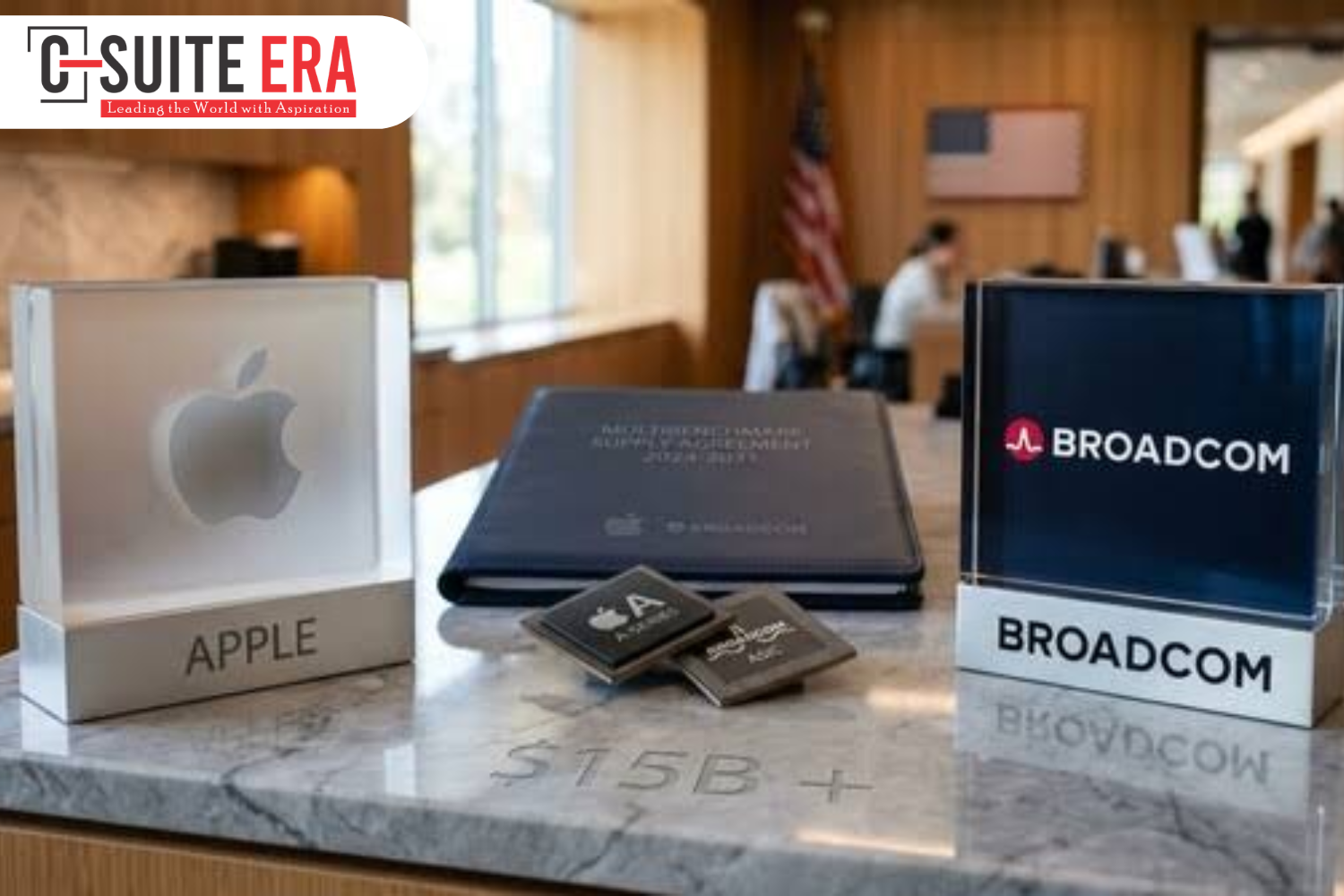
Apple has announced a multi-year agreement to spend more than $30 billion on US Chip Manufacturing components from Broadcom, marking one of the company’s largest supplier commitments as it accelerates investment in American manufacturing.
According to Reuters, the agreement extends through 2031 and focuses on the production of advanced FBAR (Film Bulk Acoustic Resonator) radio-frequency filters, essential components that enable wireless connectivity across Apple’s product lineup, including iPhones, iPads, Apple Watches, and other devices.
As part of the partnership, Broadcom will invest $1.5 billion to expand its manufacturing facility in Fort Collins, Colorado, significantly increasing domestic production capacity. The expanded facility is expected to manufacture at least 15 billion chips during the life of the agreement, strengthening Apple’s U.S.-based semiconductor supply chain.
Apple Chief Executive Tim Cook described the agreement as a major step toward strengthening American manufacturing and supporting high-tech innovation within the United States. The company said the advanced wireless components produced in Colorado play a critical role in delivering the performance, speed, and connectivity expected from Apple products.
The announcement aligns with the Trump administration’s efforts to expand domestic semiconductor production and reduce dependence on overseas manufacturing. Apple stated that the Broadcom agreement represents the largest commitment under its broader American Manufacturing Program, reinforcing its long-term strategy of increasing investment in U.S.-based suppliers.
Following the announcement, Broadcom shares US Chip Manufacturing rose more than 4%, reflecting investor optimism about the long-term revenue opportunity created by the expanded partnership. Apple shares were little changed during trading.
2. Colorado Facility Becomes a Key Hub for Advanced Semiconductor Production
The agreement significantly expands the strategic importance of Broadcom’s Colorado manufacturing operations.
Reuters reported that the Fort Collins facility will manufacture advanced radio-frequency chips that help Apple devices maintain reliable wireless communication across cellular, Wi-Fi, Bluetooth, and satellite networks. These highly specialized components filter radio signals and improve communication efficiency while reducing interference.
Broadcom has supplied connectivity US Chip Manufacturing to Apple for many years, making the company one of Apple’s most important semiconductor partners. The new agreement extends that relationship while providing Broadcom with long-term production certainty through 2031.
Industry analysts note that Apple has increasingly diversified its semiconductor strategy over the past several years. While the company now designs many of its own processors through Apple Silicon, it continues to rely on specialized suppliers such as Broadcom for critical wireless technologies that require deep engineering expertise and complex manufacturing capabilities.
The Colorado expansion also reflects broader changes within the global semiconductor industry. Governments around the world have encouraged domestic chip production following supply chain disruptions experienced during the COVID-19 pandemic and rising geopolitical tensions affecting international technology manufacturing.
For Broadcom, the investment strengthens its position as one of the world’s leading semiconductor suppliers. The company expects the facility expansion to create additional high-skilled manufacturing jobs while supporting future generations of Apple products requiring increasingly sophisticated wireless technologies.
The agreement also eases investor concerns that Apple’s continued development of in-house chip technologies might eventually reduce its reliance on Broadcom. Instead, the long-term contract demonstrates that both companies expect their collaboration to remain central to Apple’s hardware strategy for years to come.
3. Domestic Manufacturing Becomes a Strategic Priority
The Broadcom agreement forms part of Apple’s broader commitment to expand its economic footprint in the United States.
Reuters reported that Apple has now increased its overall U.S. investment commitment to $600 billion over four years, building on previous announcements involving manufacturing, research, artificial intelligence, and semiconductor development. The company has been steadily increasing investments in domestic suppliers as policymakers encourage greater resilience within the American technology supply chain.
Rather than relocating final product assembly entirely to the United States, Apple has focused on increasing domestic production of high-value components such as semiconductors, advanced silicon, and server infrastructure. Industry experts view this approach as more practical given the complexity of Apple’s global manufacturing network while still supporting national semiconductor objectives.
The agreement also demonstrates how major technology companies are responding to changing geopolitical and economic conditions. Building stronger domestic supply chains reduces exposure to international disruptions while supporting long-term manufacturing capacity within the United States.
For Apple, securing a reliable domestic source of critical wireless components strengthens production stability as demand for advanced connectivity continues growing across smartphones, wearables, and future AI-enabled devices. For Broadcom, the contract guarantees years of sustained production and reinforces its role as a strategic supplier to one of the world’s largest technology companies.
As governments and businesses continue prioritizing semiconductor independence, agreements such as Apple’s $30 billion commitment illustrate how long-term partnerships are reshaping the global technology US Chip Manufacturing supply chain. The Colorado expansion is expected to become a cornerstone of Apple’s US Chip Manufacturing strategy while contributing to broader efforts to strengthen America’s position in advanced semiconductor production.
Also Read :- US Lawmakers Move to Counter China’s Global AI Expansion Through New Tech Export Strategy