


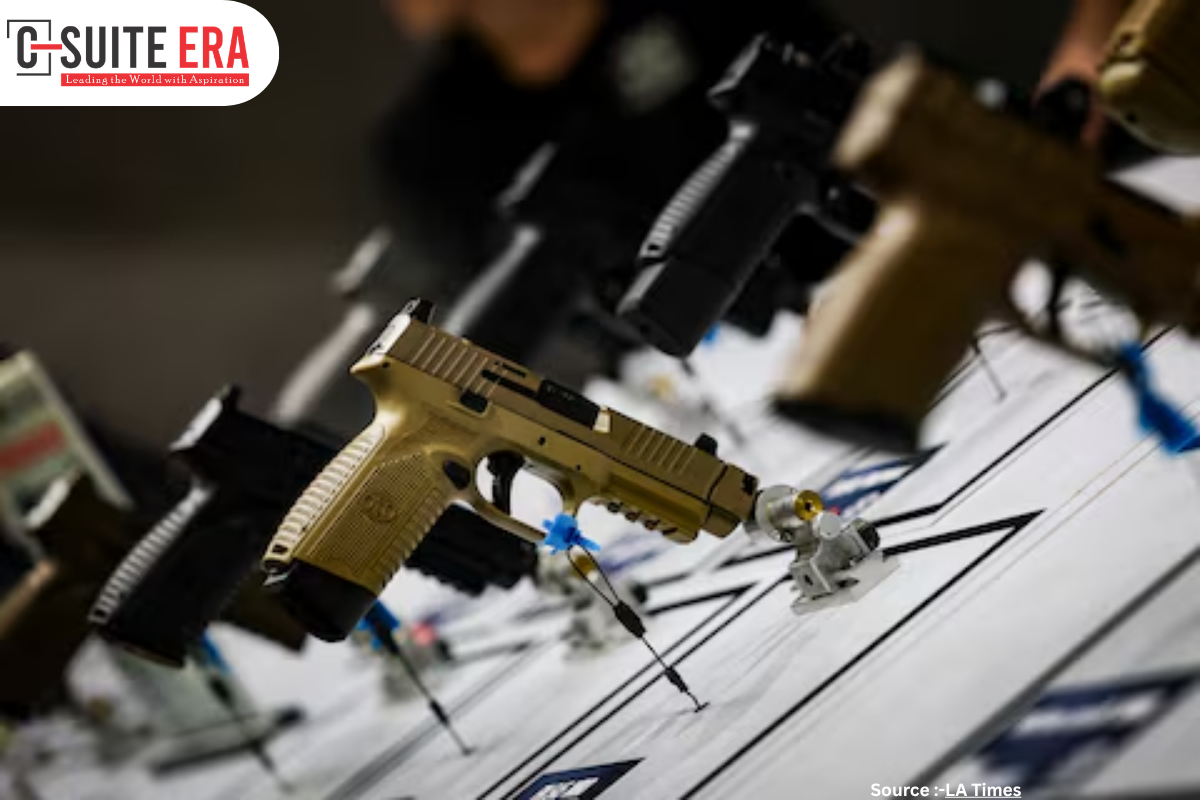
US Supreme Court Reopens Debate Over Firearm Restrictions and Constitutional Rights
The has agreed to hear a major constitutional challenge to a federal law that prohibits illegal drug users from possessing firearms, setting the stage for another closely watched Second Amendment case.
According to Reuters, the court on June 18 agreed to review a lower-court ruling that struck down the federal restriction, which has long made it unlawful for individuals who use illegal drugs to own or possess guns. The case will be heard during the court’s next term and could have significant implications for how firearm regulations are evaluated under the Constitution.
The dispute centers on a challenge brought by , a Mississippi resident who was convicted after police discovered firearms in his vehicle during a traffic stop and later determined that he regularly used marijuana. Daniels argued that the federal prohibition violates the Second Amendment right to keep and bear arms.
In 2024, the ruled in Daniels’ favor, concluding that the government had failed to demonstrate that disarming all illegal drug users was consistent with the nation’s historical tradition of firearm regulation. That ruling relied heavily on the Supreme Court’s landmark 2022 decision in , which established a new framework for evaluating gun laws based on historical precedent.
The Biden administration initially defended the law before leaving office, and the Trump administration has continued the government’s appeal. Federal officials argue that individuals who use illegal drugs may present heightened risks to public safety and that Congress has long possessed authority to restrict firearm access for certain categories of people.
The US Supreme Court decision to hear the case signals its continued interest in defining the limits of gun regulation following a series of major Second Amendment rulings in recent years.
Lower Courts Have Reached Conflicting Conclusions
The case arrives amid growing disagreement among federal courts regarding how firearm restrictions should be interpreted under the Supreme Court’s modern Second Amendment framework.
Following the US Supreme Court Bruen decision, numerus federal gun laws have faced constitutional challenges. Courts across the country have reached differing conclusions on restrictions involving domestic violence offenders, individuals subject to protective orders, convicted felons, and unlawful drug users.
The Fifth Circuit concluded that while governments historically restricted firearms for certain dangerous individuals, there was insufficient historical evidence supporting a broad prohibition on all unlawful drug users possessing guns. The court emphasized that constitutional rights cannot be limited without demonstrating a comparable historical tradition dating back to the nation’s founding.
Federal prosecutors strongly disagree with that interpretation. They contend that intoxication and substance abuse have long been recognized as factors that can impair judgment and increase the risk of violence, making firearm restrictions both reasonable and consistent with historical public safety measures.
The issue has become increasingly significant as attitudes toward marijuana continue to evolve. Although many states have legalized recreational or medical cannabis, marijuana remains illegal under federal law. As a result, individuals who legally purchase cannabis under state law may still be classified as unlawful drug users for purposes of federal firearm regulations.
Gun rights advocates argue that this creates a legal contradiction that places millions of Americans in a difficult position, while supporters of the law maintain that federal firearm standards should remain tied to federal drug statutes regardless of state-level legalization efforts.
The Supreme Court’s review is expected to provide important guidance on how lower courts should assess similar challenges moving forward.
US Supreme Court Decision Could Shape Future Gun Policy Nationwide
Legal experts believe the case could become one of the most consequential Second Amendment disputes of the upcoming Supreme Court term.
The outcome will likely influence not only the federal ban on firearm possession by unlawful drug users but also broader questions regarding who can be prohibited from owning guns under the Constitution. A ruling narrowing the government’s authority could invite additional challenges to other longstanding firearm restrictions.
The case follows the US Supreme Court’s 2024 decision in , in which the court upheld a federal law preventing individuals subject to domestic violence restraining orders from possessing firearms. In that decision, the justices emphasized that governments may disarm individuals who pose credible threats to public safety.
Observers expect the Daniels case to test how broadly that principle can be applied. The central question is whether unlawful drug users as a category can be considered sufficiently dangerous to justify firearm restrictions or whether such prohibitions are too broad under the Second Amendment.
The debate comes at a time when gun policy remains one of the most contentious issues in American public life. Supporters of stronger firearm regulations argue that public safety concerns warrant restrictions for individuals whose judgment may be impaired by drug use. Gun rights advocates counter that constitutional protections should not be withdrawn without clear historical justification and individualized evidence of dangerousness.
As the US Supreme Court prepares to hear arguments, the case is expected to attract significant attention from legal scholars, civil rights organizations, firearm advocacy groups, and policymakers. The ruling could affect not only federal firearms law but also the broader constitutional framework governing how courts evaluate restrictions on fundamental rights.
With the justices once again stepping into the center of America’s ongoing debate over gun rights and public safety, the Daniels case may become another landmark chapter in the evolving interpretation of the Second Amendment.
Also Read : C Suit Era Magazine for more information