


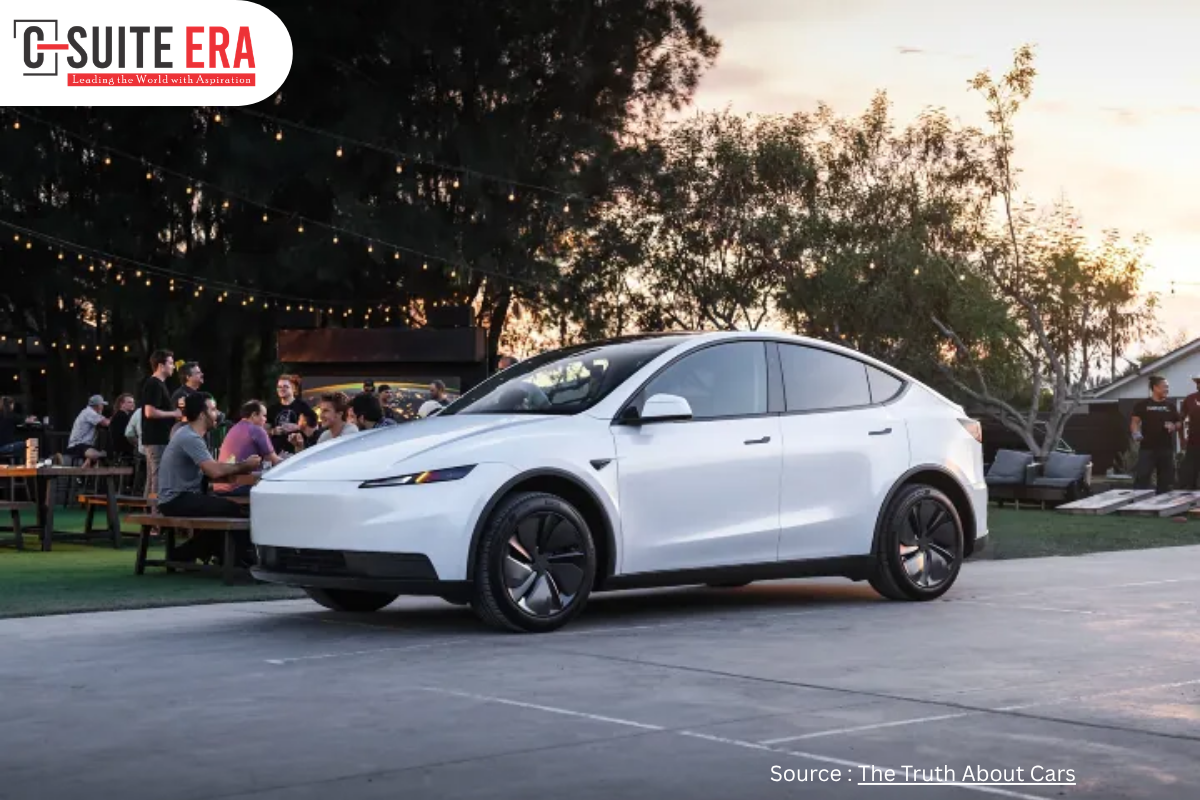
Tesla autonomous vehicles Predicts Widespread Deployment of Driverless Cars in 2026
Elon Musk has stated that fully Tesla Autonomous Vehicles without human safety monitors are expected to become widely used across the United States later this year, marking one of his most ambitious timelines yet for autonomous vehicle deployment. The announcement was made during a technology and mobility summit in Tel Aviv, where he outlined Tesla’s progress in expanding its robotaxi-style operations beyond limited pilot regions.
According to Reuters reporting, Tesla already operates unsupervised autonomous vehicles in select cities in Texas, including Austin, Dallas, and Houston, where early-stage ride-hailing services are being tested. Musk indicated that these deployments represent the foundation for a broader national rollout, with expansion expected across additional US states in the coming months.
He further suggested that within the next decade, artificial intelligence systems could handle the vast majority of driving activity, reinforcing Tesla’s long-term strategic shift from an electric vehicle manufacturer to an AI-driven mobility and robotics company.
Robotaxi Expansion Strategy Faces Technical and Regulatory Reality Check
While Musk’s projections highlight aggressive scaling ambitions,Tesla autonomous vehicles
program continues to operate under significant technical and regulatory constraints. Current deployments remain limited in scope, with safety monitors still present in many test vehicles and operations confined to specific geofenced zones.
Industry observers note that Tesla’s robotaxi rollout has experienced slower-than-expected expansion, with ongoing challenges including system reliability, inconsistent trip availability, and regulatory approvals across US states. Recent reporting indicates that while Tesla has expanded pilot services, scaling to a fully driverless national network will require substantial improvements in software stability and infrastructure integration.
Regulatory agencies in both the United States and Europe have also maintained a cautious stance on unsupervised autonomous driving systems, requiring extensive validation before broader commercial deployment. These oversight frameworks continue to shape the pace at which Tesla and competitors like Waymo can expand operations.
Despite these constraints, Tesla has continued to invest heavily in AI compute systems and fleet learning models, positioning autonomous driving as a core long-term revenue driver rather than a supplementary feature.
Broader Industry Impact and Strategic Implications
The potential widespread adoption of self-driving Tesla autonomous vehicles
carries significant implications for the global automotive and transportation sectors. If Tesla achieves scalable autonomy within the timeline outlined by Musk, it could accelerate the shift toward mobility-as-a-service models, reducing reliance on private car ownership and reshaping urban transportation systems.
Financial markets have long viewed Tesla’s autonomy strategy as central to its valuation narrative, with investor expectations tied closely to the success of its Full Self-Driving (FSD) software and robotaxi ambitions. The company’s long-term strategy increasingly centers on monetizing software, fleet operations, and AI services rather than one-time vehicle sales.
At the same time, skepticism persists among analysts regarding the feasibility of achieving near-universal autonomous driving within a single year. Historical delays in Tesla’s self-driving roadmap, combined with safety concerns and regulatory complexity, have led many experts to treat such timelines as aspirational rather than guaranteed.
Nevertheless, the direction of travel in the industry is becoming clearer. Automakers and technology firms alike are accelerating investments in autonomy, sensor fusion systems, and AI-driven navigation platforms. Even if full-scale deployment takes longer than projected, the competitive race toward driverless mobility is already reshaping automotive R&D priorities globally.
As Tesla autonomous vehicles pushes forward, the next phase will likely be defined not only by technological capability but also by regulatory acceptance, public trust, and real-world safety performance—factors that will ultimately determine how quickly self-driving cars move from controlled pilot programs to mainstream transportation infrastructure.
Also Read : – C Suit Era Magazine for More information