
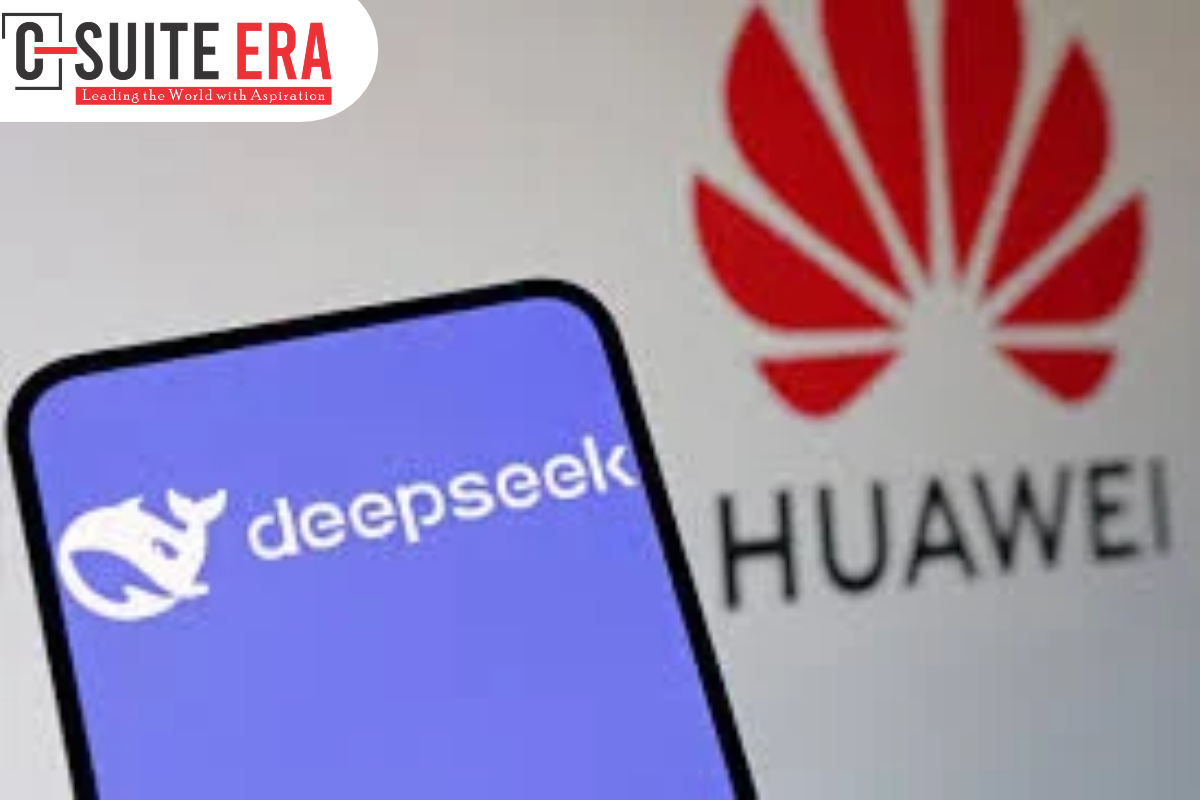
Chinese artificial intelligence company DeepSeek has partnered with Huawei Technologies to develop programming tools for Huawei’s Ascend AI chips, marking a deeper collaboration between two major Chinese technology companies seeking alternatives to Nvidia’s ecosystem.
The partnership focuses on software rather than simply developing new hardware. DeepSeek is open-sourcing infrastructure designed for Huawei’s Ascend platform, including its high-level programming language TileLang and related computing and communication libraries.
DeepSeek Targets Greater Independence
DeepSeek said the collaboration is aimed at building a more independent GPU software ecosystem in which developers can program AI systems efficiently without depending heavily on Nvidia’s technology stack.
The company described the development of a high-level programming language as a key requirement for creating such an ecosystem. TileLang is designed to provide a simpler programming model while still allowing developers to access the performance of the underlying hardware.
The effort reflects a broader shift among Chinese AI companies toward developing software and hardware combinations that can operate with greater independence from foreign technology.
Huawei’s Ascend Platform Takes Center Stage
Huawei’s Ascend chips are at the heart of the collaboration.
The company has developed Ascend as its domestic alternative for AI computing, while also building its own software ecosystem around the hardware. DeepSeek’s decision to contribute programming tools could help make Huawei’s chips easier for AI developers to use.
For Huawei, a stronger software ecosystem could be important because advanced AI hardware requires more than raw computing performance. Developers also need programming frameworks, libraries and communication tools that allow AI models to run efficiently.
TileLang Offers an Alternative Programming Approach
TileLang is one of the most important components of DeepSeek’s contribution.
The programming language is intended to make it easier for developers to write high-performance code for AI accelerators. DeepSeek said its approach can simplify programming and improve development efficiency compared with Nvidia’s CUDA programming model.
CUDA has become deeply embedded in the global AI industry because developers have spent years building software and AI applications around Nvidia’s architecture. Creating an alternative therefore requires not only competitive chips but also tools that developers can adopt without excessive engineering work.
Software Is Becoming as Important as Hardware
The partnership demonstrates why software has become a major battleground in the AI semiconductor industry.
AI developers typically depend on a combination of processors, programming languages, libraries and communication frameworks. Even if an alternative chip offers strong computing capabilities, adoption can remain difficult if developers have to rewrite large amounts of existing software.
DeepSeek’s work with Huawei attempts to address that challenge by improving the software layer surrounding Ascend chips.
A Strategic Shift Away From Nvidia
DeepSeek has previously relied heavily on Nvidia hardware, but the company has increasingly explored Chinese alternatives.
In July, reports indicated that DeepSeek was also developing its own AI chip focused on inference, the stage at which trained AI models generate responses for users. That effort represented a potential longer-term move toward greater control over its computing infrastructure.
The new Huawei collaboration adds another layer to that strategy by focusing on the software required to make domestic AI hardware more useful.
DeepSeek and Huawei Can Benefit From Each Other
The relationship offers potential advantages for both companies.
DeepSeek can gain deeper experience optimizing its models and software for Huawei’s hardware. Huawei, meanwhile, can benefit from DeepSeek’s expertise in AI model development and high-performance computing.
A stronger software ecosystem could also make Ascend chips more attractive to other Chinese developers, potentially expanding demand for Huawei’s AI hardware.
China’s AI Industry Builds Around Domestic Technology
The collaboration comes as Chinese technology companies face continuing restrictions on access to some advanced foreign semiconductor technologies.
Those restrictions have encouraged companies to develop domestic alternatives across the AI technology stack, from processors and memory to software and cloud infrastructure.
DeepSeek’s approach shows that reducing dependence on foreign technology is not simply a matter of replacing one chip with another. Developers also need alternative tools that can support the entire process of building and deploying AI models.
The Challenge of Replacing an Established Ecosystem
Despite the progress, replacing Nvidia’s technology ecosystem remains a substantial challenge.
Nvidia’s advantage extends beyond its processors. CUDA has become a widely used development platform with a large collection of libraries, tools and developer experience behind it.
Chinese companies therefore need to make domestic alternatives competitive not only in hardware performance but also in programming efficiency, compatibility and developer support.
DeepSeek’s decision to open-source TileLang and related infrastructure could help address part of that challenge, although broader adoption will depend on how effectively developers can use the tools in real-world AI workloads.
A New Phase in China’s AI Hardware Race
The DeepSeek-Huawei partnership shows that China’s AI industry is increasingly focused on building a complete domestic technology stack.
Rather than concentrating solely on chip design, companies are also working on the programming languages and software infrastructure needed to make those chips practical at scale.
For DeepSeek, the collaboration could strengthen its ability to operate across different computing platforms. For Huawei, it could help expand the software ecosystem around Ascend.
The broader significance lies in the growing competition over the full AI stack. As Chinese companies deepen cooperation around domestic chips and software, the race is shifting from individual AI models toward control of the infrastructure that powers them.
also Read :- Boeing Engineers Union Backs Latest Contract Offer After Earlier Rejection