


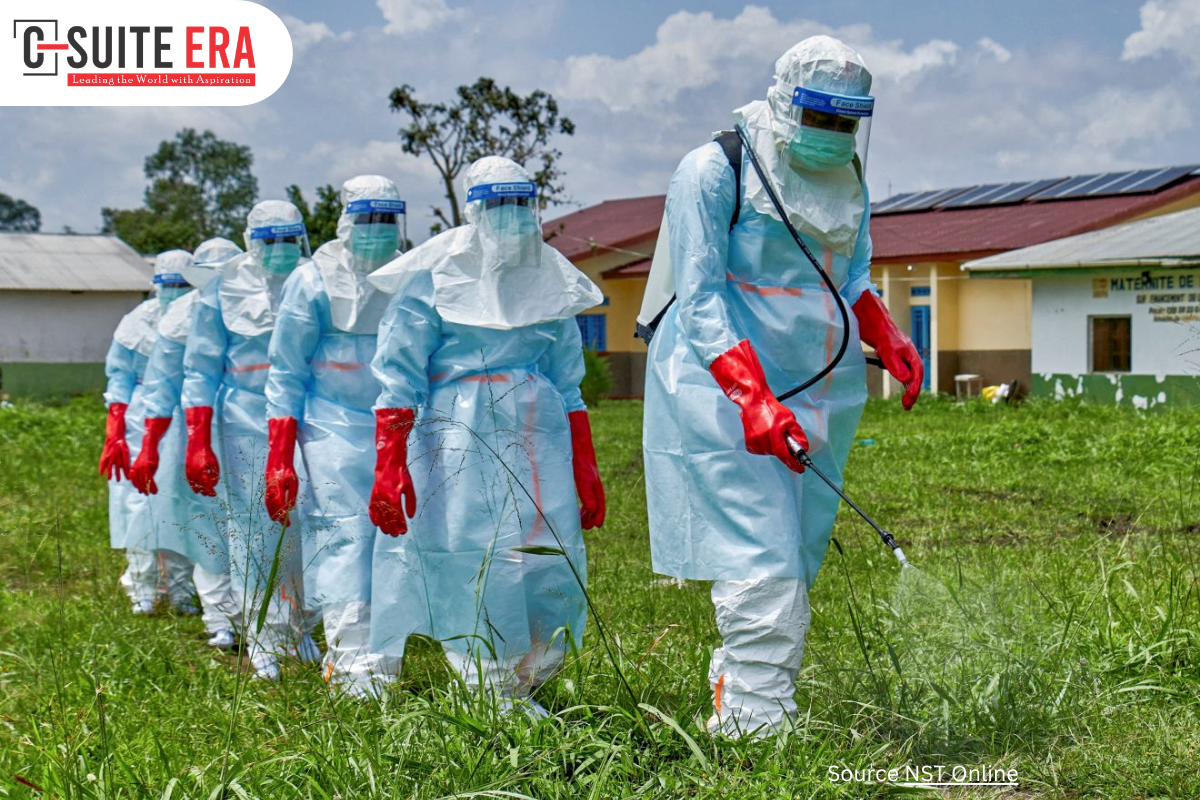
The United States has announced plans to send American citizens exposed to Ebola in Kenya to a designated quarantine facility rather than bring infected patients back to the US, marking a significant public health response as East Africa confronts a growing outbreak.
According to Reuters, the decision applies to US citizens who may have been exposed during recent transmission events linked to Kenya’s western border region. American officials said those identified as close contacts of confirmed cases will be transported to a secured quarantine camp within Kenya for observation and testing rather than being immediately repatriated to US soil.
The move reflects Washington’s effort to contain risk while supporting regional outbreak control measures. US health authorities emphasized that no infected Americans are currently being flown back to the United States and that quarantine protocols are intended to monitor potentially exposed individuals during Ebola’s incubation period, which can extend up to 21 days.
The outbreak Ebola in Kenya has triggered heightened international concern because of the country’s role as a major East African travel and logistics hub. Public health officials have warned that cross-border movement could complicate containment efforts if aggressive surveillance and quarantine measures are not rapidly implemented.
Kenyan health authorities, working alongside international agencies including the World Health Organization, have expanded contact tracing operations and activated emergency response centers in affected regions. Screening procedures at airports and border crossings have also been strengthened as part of broader containment efforts.
US officials said the quarantine decision was made in coordination with Kenyan authorities and international health experts to ensure that potentially exposed individuals receive medical monitoring while minimizing the risk of cross-continental transmission.
Quarantine Strategy Reflects Lessons From Past Ebola Outbreaks
The decision not to repatriate exposed individuals immediately reflects lessons learned from previous Ebola crises, particularly the 2014–2016 West Africa outbreak, when infected patients transported internationally triggered intense public concern and logistical challenges.
During that earlier Ebola in Kenya , several infected aid workers were flown to the United States for specialized treatment under strict biosecurity protocols. While those transfers were successfully managed, they also exposed gaps in preparedness and fueled debate over balancing humanitarian medical evacuation with domestic public health risk management.
This time, US officials appear to be prioritizing regional containment and localized monitoring rather than transcontinental transport. Reuters reported that the designated quarantine site in Kenya has been equipped to isolate exposed individuals and provide immediate medical intervention if symptoms develop.
Ebola remains one of the world’s deadliest infectious diseases, with case fatality rates varying by strain but often reaching 50% or higher in severe outbreaks. The virus spreads through direct contact with bodily fluids of infected individuals, making early isolation and rigorous contact tracing essential to preventing wider transmission.
Health experts note that Kenya’s healthcare infrastructure is significantly stronger than that of several countries previously affected by major Ebola outbreaks, improving the chances of rapid containment if response systems remain adequately resourced.
Still, public health specialists caution that urban transmission or delayed case identification could significantly increase the outbreak’s complexity, particularly in densely populated transport corridors connecting Kenya to neighboring states.
Broader Global Health Implications Raise Preparedness Questions
The US response comes at a time of renewed global concern over emerging infectious disease preparedness, as governments continue reassessing international outbreak response frameworks developed after the COVID-19 pandemic.
Public health analysts say the decision highlights a broader shift toward regionalized containment strategies, where affected areas receive intensive international support rather than relying on patient evacuation to developed nations.
The approach is also likely influenced by domestic political sensitivities surrounding infectious disease management. Bringing potentially exposed individuals back to the US could have triggered political scrutiny and public anxiety, particularly amid broader debates over border health security and emergency preparedness.
The outbreak has prompted several countries to review travel advisories and airport screening procedures for passengers arriving from East Africa. International health agencies are closely monitoring transmission data to determine whether the outbreak remains localized or risks wider regional spread.
For Kenya, containing the Ebola in Kenya quickly will be critical not only for public health but also for economic stability. Extended outbreaks can disrupt tourism, trade routes, and international investment confidence, particularly in countries serving as regional commercial hubs.
US officials have stressed that the quarantine measures are precautionary and that no widespread threat to Americans currently exists. However, the situation underscores how rapidly localized outbreaks can escalate into international health concerns in an interconnected global environment.
As monitoring continues, the response in Kenya is likely to become a closely watched test of modern outbreak management protocols and international coordination in preventing another large-scale Ebola crisis.
Also Read :- California Chemical Emergency Stabilized as Explosion Risk at Garden Grove Tank Is Eliminated