

As conversations surrounding mental health, trauma recovery, and emotional well-being continue to gain global attention, the healthcare and wellness industries are undergoing a powerful transformation. People are no longer looking solely for temporary coping mechanisms or surface-level solutions—they are searching for deeper, science-backed approaches that address the root causes of emotional pain and help create lasting change. This growing demand has brought neuroscience, neuroplasticity, and trauma-informed care into the spotlight, reshaping how experts understand healing, resilience, and human potential.
Across the world, researchers, clinicians, and thought leaders are increasingly recognizing that trauma affects far more than emotions alone. It influences the brain, nervous system, behavior, relationships, and even physical health. As a result, the industry is shifting toward integrated models that combine scientific understanding with compassionate, human-centered support. Concepts such as nervous system regulation, psychological safety, emotional resilience, and neuroplasticity are becoming central to modern conversations about recovery and empowerment.
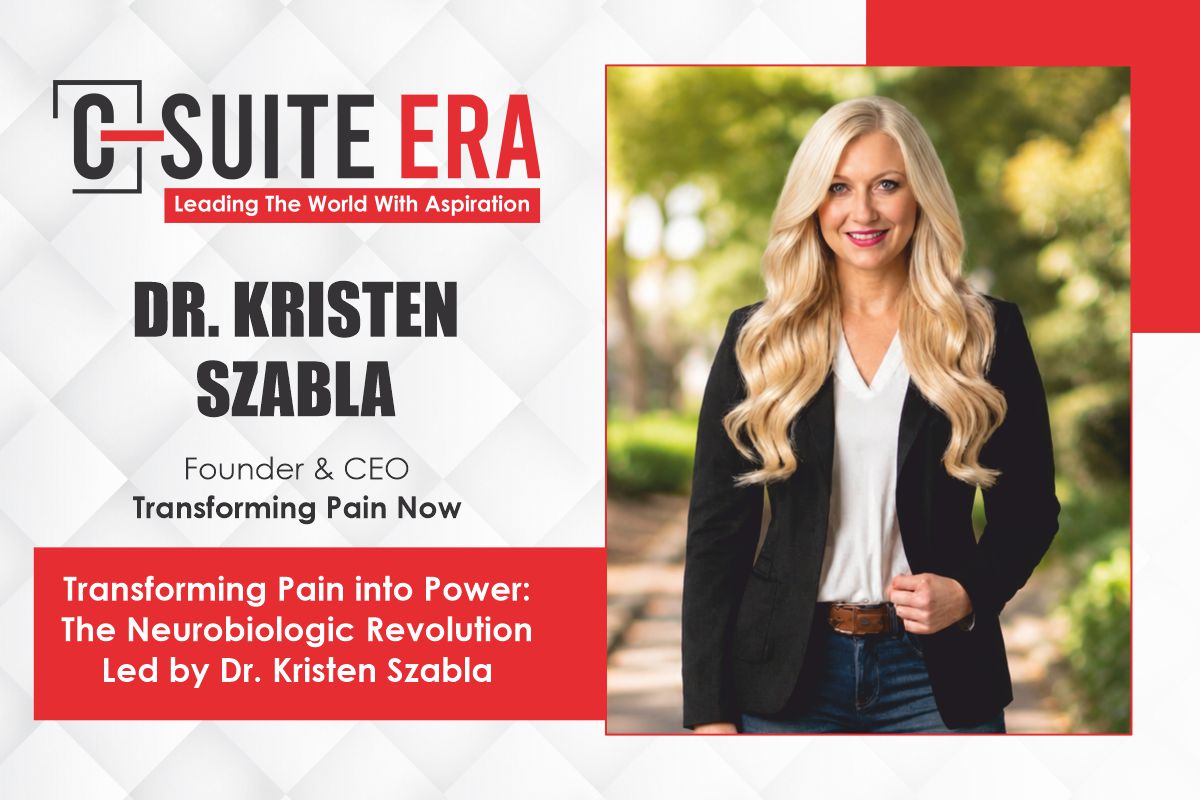
At the forefront of this movement is a new generation of leaders combining scientific rigor with compassionate human connection to redefine what recovery truly means. Among them is Dr. Kristen Szabla neuroscientist, trauma recovery advocate, speaker, and founder of Transforming Pain Now®. Through her work, Dr. Kristen L. Szabla is helping bridge the gap between cutting-edge neuroscience and accessible healing practices, empowering individuals to understand that trauma responses are not evidence of brokenness, but adaptive survival mechanisms that can be rewired through intentional healing and neuroplasticity.
With a mission rooted in both lived experience and scientific expertise, Transforming Pain Now® is reshaping how people view trauma, resilience, and emotional empowerment. By integrating neuroscience, nervous system regulation, psychological safety, and transformational coaching, Dr. Szabla is creating a platform that not only educates but also inspires hope—proving that healing is not merely possible, but biologically supported. In a world increasingly seeking deeper emotional resilience and authentic empowerment, her work stands as a powerful reminder that pain does not have to define the future.
Turning Survival into Purpose
Long before Dr. Kristen L. Szabla became a neuroscientist, trauma recovery advocate, and founder of Transforming Pain Now®, she was navigating a deeply personal battle shaped by childhood abuse, violence, and mental health struggles that would later redefine the purpose of her life. Beneath the professional accomplishments and scientific expertise was a woman searching for answers to questions many trauma survivors silently carry: Why does the pain remain even after years of trying to heal? Why does the mind understand safety while the body continues to live in survival mode?
For years Dr. Kristen L. Szabla pursued healing through traditional pathways, determined to understand the invisible patterns that continued shaping her emotional and psychological experiences. But it was her discovery of neuroplasticity—the brain’s remarkable ability to rewire and adapt throughout life—that transformed both her understanding of trauma and her vision for the future.
“For the first time, I realized that healing was not simply emotional—it was biological,” she shares. “The brain was not permanently damaged. The nervous system was capable of learning differently.”
That realization became the foundation of Transforming Pain Now®, a platform built at the intersection of neuroscience, trauma recovery, and authentic empowerment. What began as a personal journey toward understanding evolved into a larger mission to help others recognize that trauma responses are not evidence of weakness, but survival adaptations that can be transformed through awareness, science, and compassion.
“My mission has always been to help people understand that they are not broken,” Dr. Szabla says. “Healing is possible, and hope is grounded in science.”
Reframing Trauma Through the Lens of Neuroscience
For decades, trauma has often been misunderstood as a sign of emotional weakness, instability, or personal failure. Dr. Kristen L. Szabla is working to challenge that narrative by helping people understand trauma through the lens of neuroscience rather than shame. Through her work at Transforming Pain Now®, she continues to educate individuals about the profound ways trauma reshapes the brain, nervous system, and emotional responses—often long after the original experience has passed.
“One of the biggest misconceptions people have is believing trauma is simply a memory problem,” Dr. Kristen L. Szabla explains. “In reality, trauma is frequently stored as patterns within the brain and nervous system, which is why people can logically know they are safe while their bodies continue responding as though danger is still present.”
Drawing from her expertise in fear circuitry, depression, and neuroplasticity, Dr. Szabla emphasizes that many trauma responses—including hypervigilance, emotional shutdown, perfectionism, anxiety, or people-pleasing—are not character flaws, but adaptive survival mechanisms developed by the brain to protect the individual from further harm.
“What we often criticize in ourselves was once the nervous system’s attempt to survive,” she says. “Understanding that changes everything because it replaces shame with self-compassion.”
Central to her philosophy is neuroplasticity—the brain’s ability to reorganize and form new neural pathways throughout life. Rather than viewing healing as forgetting the past, Dr. Szabla believes healing involves helping the nervous system learn safety again.
“The brain can learn differently,” she shares. “And that means transformation is not only possible, but scientifically supported.”
Building Healing Through Science and Human Connection
Transforming Pain Now® was created with a vision far greater than traditional wellness coaching or symptom management. Founded by Dr. Kristen L. Szabla, the platform stands at the intersection of neuroscience, trauma recovery, nervous system regulation, and authentic empowerment, offering individuals a science-informed pathway toward long-term emotional healing and resilience.
At the heart of the organization is a commitment to helping people understand that trauma is not simply emotional distress—it is a neurobiological experience that affects the brain, nervous system, behavior, and sense of safety. Through educational initiatives, coaching programs, and transformational frameworks, Transforming Pain Now® helps individuals move beyond survival-based patterns and develop healthier neural responses rooted in regulation, self-awareness, and empowerment.
“I never wanted neuroscience to feel intimidating or disconnected from real life,” Dr. Szabla explains. “My goal has always been to make the science practical, accessible, and deeply human.”
Rather than focusing solely on coping mechanisms, the platform emphasizes neuroplasticity-based healing tools that help individuals actively repattern the nervous system through consistent experiences of safety, emotional regulation, and self-trust. Programs are designed to bridge the gap between scientific understanding and everyday application, empowering participants to integrate healing practices into their relationships, workplaces, and daily lives.
Equally central to the company’s philosophy is emotional safety. Dr. Szabla believes meaningful transformation occurs when individuals feel seen, understood, and supported without judgment.
“Science creates understanding, but human connection creates transformation,” she says. “People heal most effectively when compassion and evidence-based knowledge work together.”
Leading with Compassion, Courage, and Purpose
For Dr. Kristen L. Szabla, leadership is not defined solely by authority, achievement, or visibility—it is measured by the ability to create meaningful transformation in the lives of others. As the founder of Transforming Pain Now®, her leadership philosophy is deeply rooted in empathy, resilience, scientific integrity, and human connection, shaped both by her professional expertise and her personal experiences navigating trauma and recovery.
“Empathy and resilience are not opposing forces,” Dr. Szabla explains. “Empathy allows us to understand where people are, while resilience helps us move toward where we are capable of going.”
Drawing from her background in neuroscience, she views leadership as the process of creating experiences that help people develop confidence, emotional safety, adaptability, and self-awareness. Whether working with individuals, organizations, or communities, Dr. Szabla believes psychologically safe environments are essential for growth, healing, and authentic contribution.
At the same time, she balances compassion with accountability and purpose-driven action. Her leadership approach combines evidence-based thinking with emotional intelligence, ensuring that science never becomes disconnected from humanity.
“I never want people to feel judged, minimized, or defined by their struggles,” she says. “I want them to feel understood, empowered, and capable of change.”
This philosophy has become central to the culture and mission of Transforming Pain Now®, where education, emotional safety, and empowerment work together to help individuals move beyond survival mode. For Dr. Szabla, leadership is ultimately about helping people recognize strengths they may not yet see in themselves—and creating the conditions where transformation becomes possible.
Shaping the Next Era of Trauma-Informed Healing
As conversations around mental health continue to evolve globally, Dr. Kristen L. Szabla believes the future of healing will move far beyond traditional models of diagnosis and symptom management. Through her work at Transforming Pain Now®, she envisions a future where neuroscience, technology, emotional safety, and human connection work together to create more accessible and transformative mental wellness solutions.
“We are entering a period where people are beginning to understand that trauma is not simply psychological—it is neurobiological and physiological,” Dr. Szabla explains. “That shift has the power to fundamentally change how we approach healing.”
She believes future trauma recovery models will increasingly focus on nervous system regulation, neuroplasticity, emotional resilience, and psychologically safe environments—not only within healthcare systems, but also across workplaces, schools, and communities. As organizations become more aware of how stress and trauma impact performance, communication, and well-being, trauma-informed leadership and emotional safety are expected to play a much larger role in shaping healthier cultures.
Technology, according to Dr. Szabla, will also become a powerful catalyst for accessibility and global impact. From online education platforms and virtual healing communities to neuroscience-informed digital tools and AI-driven support systems, she sees enormous potential to bridge existing gaps in mental health care.
“Too many people still lack access to timely, compassionate, and evidence-based support,” she says. “Technology allows us to bring healing resources to individuals who may otherwise never receive them.”
At the center of her vision is one core belief: healing should not be limited by geography, stigma, or circumstance. Through scalable, science-informed initiatives, Dr. Szabla hopes to help create a future where more individuals can move from survival toward resilience, empowerment, and authentic thriving.
From Survival Mode to Authentic Empowerment
At the center of Dr. Kristen L. Szabla’s work is a deeply personal mission: helping women move beyond survival mode and reclaim lives shaped not by fear, but by self-trust, resilience, and authentic empowerment. Through her transformational initiative, From Surviving to Authentically Empowered Thriving™, she works closely with women who may appear successful externally while silently carrying the emotional burden of trauma, hypervigilance, perfectionism, and chronic nervous system dysregulation.
“Many women spend years believing they are broken because of the way their minds and bodies respond to trauma,” Dr. Kristen L. Szabla explains. “What I want them to understand is that these responses were adaptations for survival, not evidence of weakness.”
Through neuroscience-informed education, nervous system regulation tools, and emotionally supportive frameworks, the initiative helps participants understand how trauma reshapes neural pathways—and how neuroplasticity can help create new patterns rooted in safety, resilience, and self-worth. Rather than focusing solely on coping, the program encourages women to reconnect with identities larger than their pain.
“Healing is not about becoming someone new,” she says. “It is about removing the survival-based patterns that prevent people from fully accessing who they already are.”
For Dr. Szabla, authentic empowerment is not perfection or fearlessness; it is the ability to live with greater presence, emotional freedom, and trust in oneself. Her work continues to inspire women around the world to believe that while trauma may shape part of their story, it does not have to define their future.
Bridging Science, Advocacy, and a Global Vision for Healing
Operating at the intersection of neuroscience, advocacy, coaching, and trauma recovery has not come without challenges for Dr. Kristen L. Szabla. In an industry where science and emotional healing are often treated as separate worlds, she has spent years building credibility while remaining deeply authentic about her own lived experiences with trauma and mental health struggles.
“For a long time, I questioned whether speaking openly about my experiences would diminish my credibility as a scientist,” she shares. “What I eventually realized is that authenticity became one of my greatest strengths.”
By combining scientific rigor with compassion and accessibility, Dr. Szabla has helped challenge the stigma surrounding trauma and mental illness while creating a platform that feels both evidence-based and profoundly human. Her work continues to redefine how people understand healing—not as weakness, but as transformation grounded in neuroscience and hope.
Looking ahead, her vision for Transforming Pain Now® extends far beyond individual coaching or education programs. She aims to build scalable healing ecosystems through online learning platforms, trauma-informed leadership initiatives, virtual communities, neuroscience-based digital tools, and future AI-driven support systems designed to expand access to mental health resources globally.
“My mission is bigger than symptom management,” she says. “I want to help create a future where people everywhere have access to the knowledge, support, and tools necessary to heal, grow, and thrive.”
At the heart of that vision remains one powerful belief: the human brain is capable of change, resilience is real, and no past experience has the power to permanently define a person’s future.
Also Read :- C Suit Era Magazine for more inforamtion