


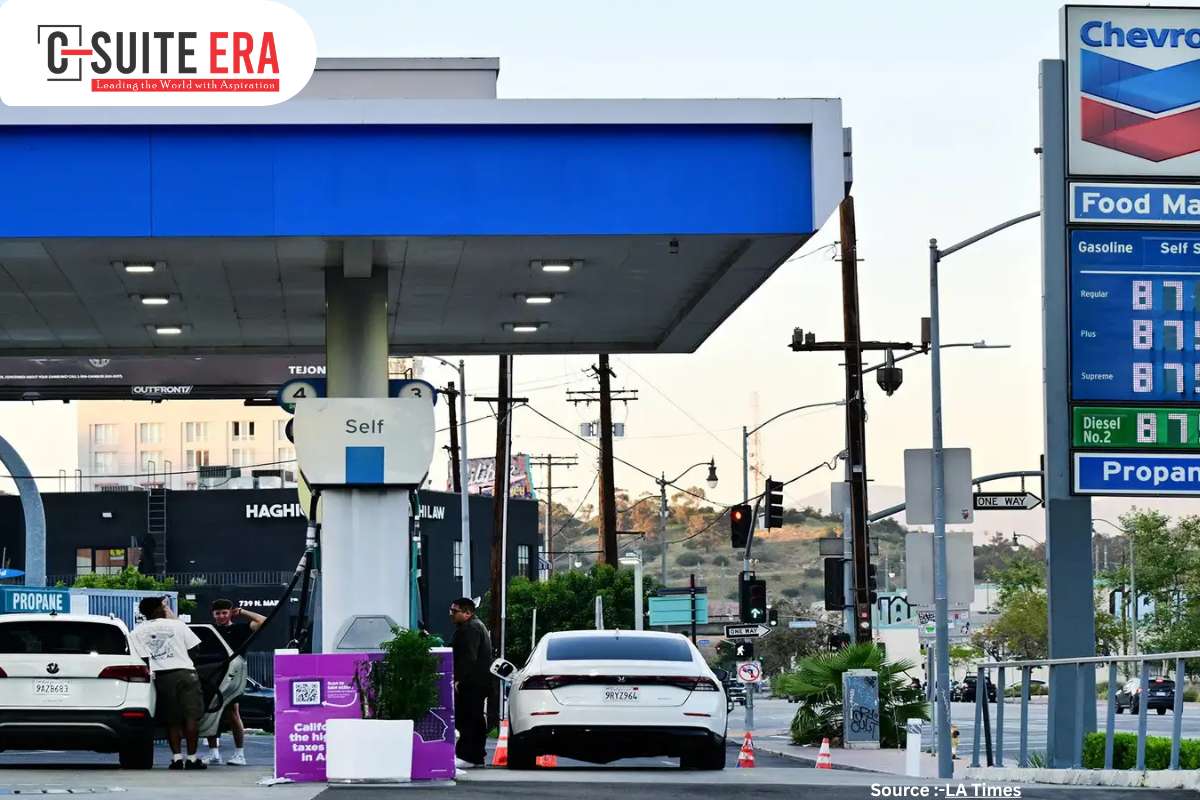
1. Record Fuel Costs Collide With a City Built Around Driving
As gasoline High Gas Prices climb across California, many economists expected motorists to reduce travel, switch transportation habits, or cut back on discretionary driving. In Los Angeles, however, the opposite appears to be happening.
According to a Reuters report, Southern California drivers continue to rely heavily on their vehicles despite fuel prices approaching some of the highest levels in the nation. The trend underscores the unique economic and cultural reality of Los Angeles, where sprawling development patterns, long commutes, and limited transit alternatives make driving less of a choice and more of a necessity. (reuters.com)
Regular gasoline High Gas Prices in parts of Los Angeles County have climbed above $6 per gallon following global oil market disruptions linked to geopolitical tensions in the Middle East. Yet traffic congestion remains largely unchanged, with highways and major commuter routes continuing to experience heavy volumes throughout the day. (reuters.com)
Transportation analysts note that Los Angeles has historically demonstrated unusually low sensitivity to fuel-price increases. Unlike many metropolitan regions where public transportation can serve as a practical substitute, much of Southern California’s workforce remains dependent on personal vehicles to reach employment centers spread across a vast urban landscape.
For many residents, reducing driving simply is not a realistic option. Commutes exceeding 30 miles each way remain common, and many suburban communities lack direct rail access or efficient bus connections. As a result, rising fuel costs are affecting household budgets more than transportation behavior.
2. Drivers Adapt Their Budgets Rather Than Their Travel Habits
Instead of driving less, many Los Angeles residents are adjusting spending elsewhere to absorb higher fuel expenses.
Reuters reported that motorists are cutting discretionary purchases, delaying vacations, reducing restaurant visits, and trimming entertainment spending in order to maintain their daily commuting routines. The pattern reflects the essential role that automobiles continue to play in the region’s economy. (reuters.com)
Economists describe this phenomenon as “inelastic demand,” meaning consumers continue purchasing a product despite rising prices because viable alternatives are limited. Fuel consumption in Los Angeles has remained relatively stable even during previous periods of price spikes, demonstrating how deeply transportation needs are embedded in everyday life.
The situation is particularly challenging for lower- and middle-income households, many of whom already face elevated housing costs. Families living farther from city centers often endure longer commutes but cannot easily relocate closer to workplaces due to affordability constraints. Consequently, transportation expenses are consuming a larger share of monthly budgets.
Businesses are also feeling the impact. Delivery companies, contractors, rideshare drivers, and small service providers have seen operating costs rise significantly. Some firms have introduced fuel surcharges, while others have absorbed higher expenses to remain competitive.
At the same time, sales of fuel-efficient vehicles and hybrid models have increased as consumers seek long-term solutions to recurring fuel price volatility. Industry analysts note growing interest in electric vehicles as well, although affordability and charging infrastructure remain barriers for many households.
3. Los Angeles Highlights a Broader Challenge for Urban Planning
The persistence of heavy driving despite soaring gasoline prices is drawing renewed attention to long-standing questions about urban planning, transportation infrastructure, and economic resilience.
For decades, Los Angeles developed around automobile mobility, creating one of the world’s largest freeway networks. While public transportation investments have expanded significantly in recent years, many residents still find transit options less convenient than driving for daily travel needs.
Urban policy experts argue that the current fuel-price environment exposes the limitations of car-dependent metropolitan design. When energy prices rise sharply, households have few immediate alternatives, leaving them vulnerable to external economic shocks. (reuters.com)
The issue is becoming increasingly relevant as California continues pursuing ambitious climate goals aimed at reducing vehicle emissions and encouraging electric vehicle adoption. Policymakers face the challenge of balancing environmental objectives with the transportation realities of millions of residents who depend on automobiles for work and daily life.
Meanwhile, transportation agencies High Gas Prices are accelerating efforts to expand rail networks, improve bus connectivity, and support alternative mobility options. However, infrastructure projects require years to deliver meaningful changes, meaning drivers remain largely dependent on existing road networks in the near term.
For now, Los Angeles presents a striking example High Gas Prices Fail of how deeply transportation habits can be embedded within a city’s economic structure. Even as fuel prices surge and household budgets tighten, traffic continues to fill freeways across the region, demonstrating that for many Angelenos, the cost of driving may be rising—but the need to drive remains unchanged.
The story highlight High Gas Prices Fails a broader reality facing modern cities: when transportation systems are built around automobiles, consumers often respond to higher fuel costs not by driving less, but by sacrificing spending elsewhere. In Los Angeles, the enduring gridlock suggests that mobility remains a necessity that many residents are willing—or compelled—to pay for regardless of price.
Also Read :0- Federal Judge Questions Trump’s Mail-In Voting Order as Legal Battle Intensifies Ahead of Midterms