


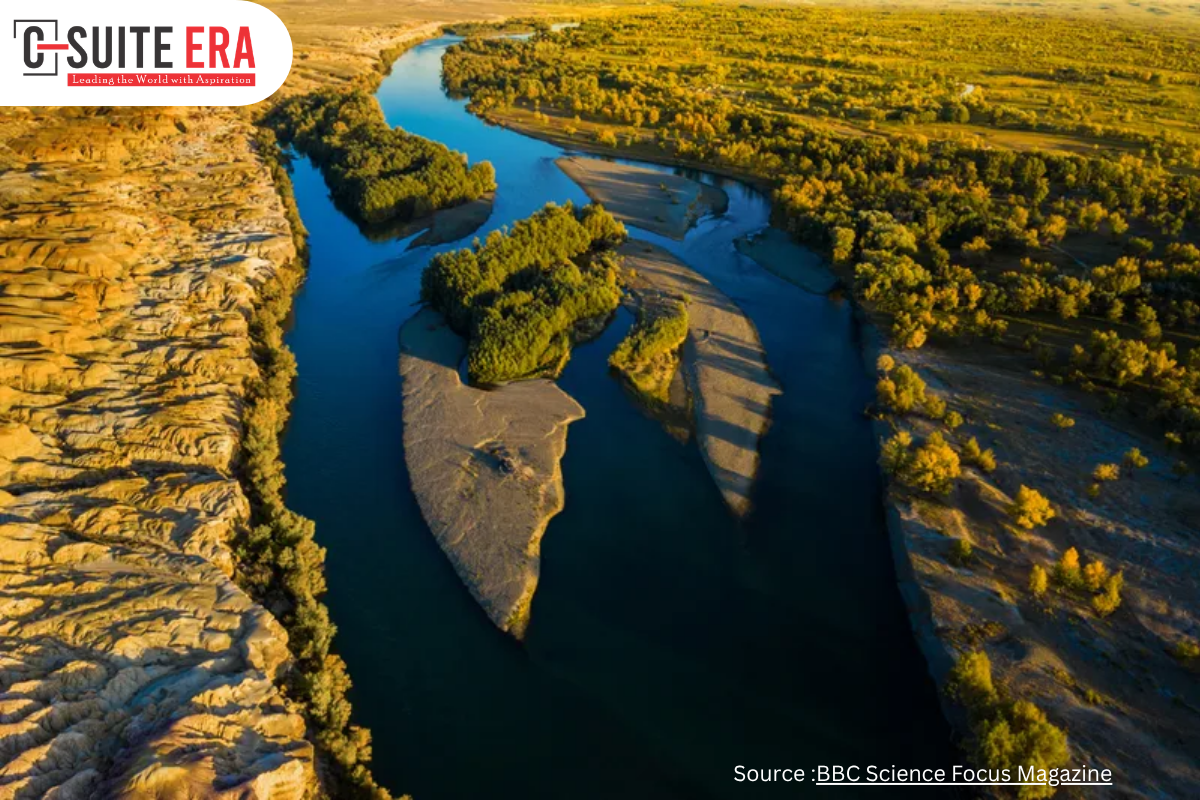
Rivers have shaped civilizations, supported agriculture, created trade routes, and influenced human history for thousands of years. Some rivers stretch across multiple countries, carrying enormous volumes of water through forests, deserts, mountains, and plains. The fascination with the longest rivers in the world comes from more than just their size. These waterways represent culture, biodiversity, economic importance, and natural beauty on a massive scale.
From the mighty Nile in Africa to the powerful Amazon in South America, these rivers continue to play a critical role in the lives of millions of people. Many of them are also home to rare wildlife, ancient settlements, and important ecosystems that scientists study even today.
Top 10 longest rivers in the world
1. Nile River
The Nile River is widely recognized as the longest river on Earth, stretching for approximately 6,650 kilometers. It flows through northeastern Africa and passes through countries including Uganda, Sudan, and Egypt before emptying into the Mediterranean Sea.
Ancient Egyptian civilization depended heavily on the Nile for farming and transportation. Even today, millions of people rely on it for drinking water and irrigation. The river also supports hydroelectric projects and tourism throughout the region.
When discussing the longest rivers in the world, the Nile is often the first river that comes to mind because of its historical importance and extraordinary length.
2. Amazon River
The Amazon River in South America is another contender for the title of the world’s longest river. While slightly shorter than the Nile according to many measurements, it carries more water than any other river on the planet.
The Amazon flows through Peru, Colombia, and Brazil, covering around 6,400 kilometers. It is surrounded by the Amazon Rainforest, which contains one of the richest ecosystems in the world. Thousands of animal and plant species depend on this river system for survival.
Scientists continue to debate whether the Amazon might actually be longer than the Nile depending on the source used for measurement. This debate keeps the topic of the longest rivers in the world active among geographers and researchers.
3. Yangtze River
The Yangtze River is the longest river in Asia and stretches around 6,300 kilometers across China. It begins in the Tibetan Plateau and eventually empties into the East China Sea near Shanghai.
This river has immense economic importance for China. It supports agriculture, transportation, fishing, and hydroelectric power generation. The Three Gorges Dam, one of the largest dams in the world, is located on the Yangtze River.
The river basin is home to nearly one-third of China’s population, making it one of the most heavily utilized waterways globally.
4. Mississippi–Missouri River System
The Mississippi–Missouri River system in North America measures approximately 6,275 kilometers. It flows through the United States and serves as one of the country’s most important transportation networks.
The river system has been central to trade and expansion throughout American history. Large cargo ships transport agricultural products, oil, and industrial goods through its waters every day.
The Mississippi River also supports wetlands and wildlife habitats that are essential for ecological balance in the region.
5. Yenisei River
The Yenisei River is one of the largest river systems in Siberia, Russia, with a length of about 5,539 kilometers. It flows northward into the Arctic Ocean.
This river passes through remote landscapes filled with forests, mountains, and frozen terrain. Despite harsh weather conditions, the Yenisei is important for shipping and hydroelectric energy production.
Its massive drainage basin makes it one of the most significant rivers in northern Asia.
6. Yellow River
Known as the “Mother River of China,” the Yellow River stretches roughly 5,464 kilometers. It earned its name from the yellow-colored silt carried in its waters.
The river played a major role in the development of ancient Chinese civilization. However, it is also known for devastating floods throughout history, which caused widespread destruction and loss of life.
Modern engineering projects have helped control flooding and improve water management along the river.
7. Ob–Irtysh River System
The Ob–Irtysh River system flows through Russia, Kazakhstan, China, and Mongolia, covering around 5,410 kilometers.
This river system is particularly important for transportation and natural resources in Siberia. During warmer months, cargo vessels use the river to transport timber, oil, and minerals across long distances.
The surrounding wetlands and forests also provide habitats for many bird and animal species.
8. Paraná River
The Paraná River in South America is approximately 4,880 kilometers long. It flows through Brazil, Paraguay, and Argentina before reaching the Atlantic Ocean.
The river supports hydroelectric dams, including the famous Itaipu Dam, which generates enormous amounts of electricity. It also plays a vital role in agriculture and trade across the region.
Fishing communities and river tourism contribute significantly to local economies along the Paraná.
9. Congo River
The Congo River stretches about 4,700 kilometers through central Africa. It is famous for being the deepest river in the world, with some sections reaching depths of more than 220 meters.
The Congo River Basin contains one of the largest tropical rainforests on Earth. The river is essential for transportation because roads and rail networks are limited in many areas of the region.
It also supports rich biodiversity, including rare species such as forest elephants and gorillas.
10. Amur River
The Amur River forms part of the border between Russia and China and measures approximately 4,444 kilometers in length.
This river is known for its ecological diversity and scenic landscapes. It provides habitats for several endangered species, including the Amur sturgeon and Siberian tiger in nearby regions.
The river also has political and economic importance because it serves as a natural boundary between two major nations.
Why These Rivers Matter?
The rivers on this list are more than geographic landmarks. They are lifelines for millions of people around the world. Cities, farms, industries, and ecosystems depend on them every single day.
Many of these rivers face environmental challenges such as pollution, deforestation, climate change, and overuse of water resources. Governments and environmental organizations continue to work on conservation efforts to protect these waterways for future generations.
Studying the longest rivers in the world also helps scientists understand climate patterns, sediment transport, freshwater ecosystems, and the impact of human activity on nature.
Tourism connected to major rivers has also become a significant economic activity. River cruises, wildlife expeditions, cultural tours, and photography attract travelers from across the globe.
Conclusion
The longest rivers in the world continue to inspire explorers, scientists, historians, and travelers alike. Their massive size, cultural influence, and ecological importance make them some of the most valuable natural resources on Earth.
Whether it is the ancient history of the Nile, the unmatched biodiversity of the Amazon, or the economic power of the Yangtze, each river tells a unique story about the regions it flows through. Understanding the longest rivers in the world gives us a deeper appreciation of how connected human civilization is to nature and water systems.
Also Read :- C suit Era Magazine for More information