


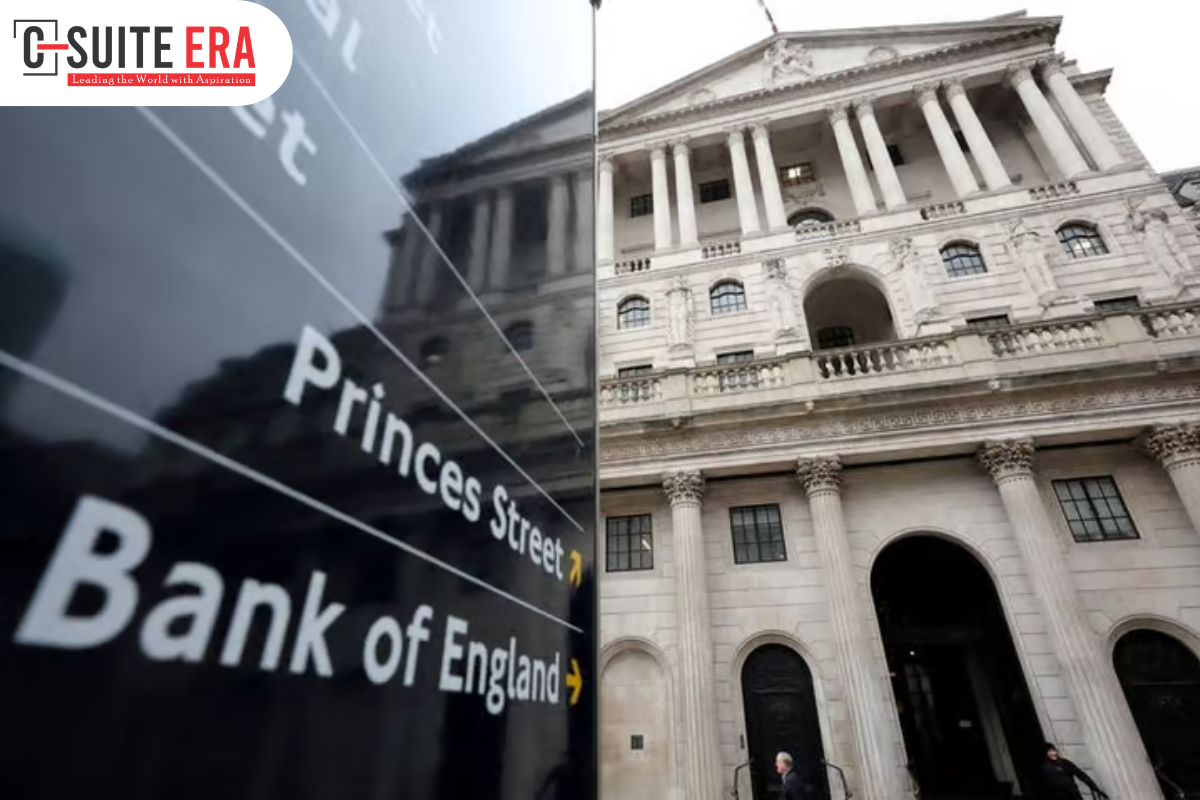
1. Bank of England Keeps Rates Unchanged in Split Vote
The left its benchmark interest rate unchanged at 3.75% on June 18, signaling a cautious approach as policymakers continue to assess inflation pressures and economic conditions across the United Kingdom.
According to Reuters, the central bank’s Monetary Policy Committee (MPC) voted 7-2 in favor of maintaining the current rate. While a majority of policymakers supported holding rates steady, two members argued for an immediate reduction, highlighting differing views on how quickly inflation risks are easing. The decision follows a quarter-point rate cut in May and suggests that policymakers are not yet ready to begin a more aggressive easing cycle.
The Bank of England said that inflation remains above its long-term target and that recent economic data present a mixed picture. While some indicators point to moderating price pressures, policymakers continue to monitor wage growth, service-sector inflation, and geopolitical developments that could influence future prices.
Financial markets had widely expected the central bank to keep rates unchanged, making the decision itself largely unsurprising. However, investors closely analyzed the voting breakdown and accompanying policy statement for clues regarding the future direction of monetary policy.
The latest decision places the Bank of England among several major central banks that have recently opted for caution despite signs that inflation has moderated from the elevated levels seen in previous years.
2. Inflation Progress Continues, but Concerns Remain
Although inflation has declined significantly from its peak, policymakers emphasized that the battle against rising prices is not yet complete.
Consumer price inflation in the United Kingdom recently stood at 3.2%, above the Bank of England’s official 2% target. While this represents substantial progress compared with the double-digit inflation rates experienced during the energy crisis, officials remain concerned that underlying price pressures could prove more persistent than anticipated.
Particular attention has focused on wage growth and services inflation, which have remained relatively elevated compared with goods prices. Policymakers worry that strong wage increases, while beneficial for household incomes, could contribute to continued inflationary pressure if businesses pass higher labor costs on to consumers.
Reuters reported that the Bank also highlighted uncertainty surrounding global trade conditions, energy markets, and geopolitical developments. These factors have the potential to influence inflation trends and complicate the path toward achieving price stability.
The split vote reflects these competing considerations. Members favoring a rate cut argued that inflation is moving closer to target and that lower borrowing costs could provide additional support to economic growth. Those supporting a hold maintained that more evidence is needed before further easing can be justified.
Economists noted that the 7-2 vote suggests the committee is gradually becoming more open to future reductions, though not yet convinced that inflation risks have diminished sufficiently to warrant immediate action.
3. Markets Look Ahead to Potential Rate Cuts Later This Year
The Bank of England’s decision leaves financial markets focused on the timing and pace of future interest-rate reductions.
Many analysts continue to expect additional cuts before the end of 2026, assuming inflation continues its downward trajectory and economic growth remains modest. However, the central bank’s latest statement indicated that future decisions will remain dependent on incoming economic data rather than following a predetermined schedule.
Higher interest rates have helped reduce inflation but have also increased borrowing costs for households and businesses. Mortgage holders, in particular, have felt the impact of elevated rates, while companies have faced more expensive financing conditions for investment and expansion.
At the same time, the British economy has shown signs of resilience. Employment levels remain relatively stable, consumer spending has held up better than some economists anticipated, and recession fears have eased compared with earlier periods of uncertainty. These factors have given policymakers additional flexibility to prioritize inflation control without facing intense pressure to stimulate growth immediately.
Investors are now closely watching upcoming data releases on inflation, wages, employment, and economic growth ahead of the Bank’s next policy meeting. Any signs that price pressures are easing more rapidly could strengthen expectations for a rate cut later this year, while persistent inflation may encourage policymakers to maintain their cautious stance.
For now, the has chosen stability over speed. The 7-2 vote underscores a growing belief that inflation is moving in the right direction, but it also reflects the central bank’s determination to ensure that progress is sustained before borrowing costs are reduced further.
As the United Kingdom navigates a complex economic environment marked by moderating inflation, steady growth, and global uncertainty, future interest-rate decisions are likely to remain among the most closely watched indicators of the country’s economic trajectory.
Also Read :- US Jobless Claims Fall as Labor Market Remains Resilient Despite Hiring Challenges