


Your Grade Point Average (GPA) is one of the most important indicators of your academic performance. Schools, colleges, universities, scholarship committees, and even employers often use it to evaluate a student’s consistency and dedication. While grades alone do not define your abilities, maintaining a strong GPA can open doors to better educational and career opportunities.
If you’ve ever wondered What Is a Good GPA, you’re not alone. The answer depends on your academic goals, the institution you’re applying to, and your chosen field of study. In this guide, we’ll explain What Is a Good GPA, how it is calculated, what different GPA scores mean, and why it matters.
What Is a GPA?
GPA stands for Grade Point Average, a numerical representation of your overall academic performance over a semester, year, or entire course of study. Instead of looking at individual grades, GPA combines all your grades into a single score, making it easier for institutions to assess your academic achievement.
Most schools and colleges use a 4.0 GPA scale, although some institutions use weighted GPAs or different grading systems.
Understanding What Is a Good GPA starts with knowing how this grading system works.
How Is GPA Calculated?
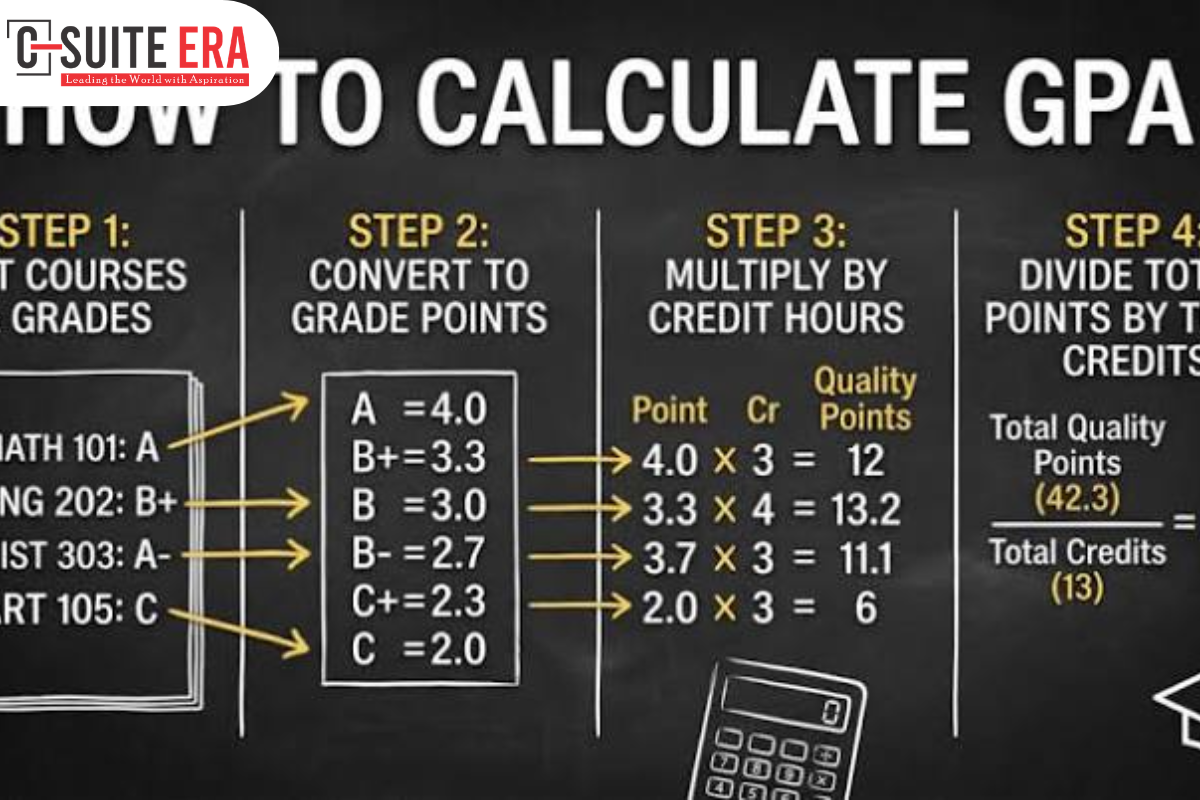
Calculating your GPA involves assigning grade points to each course based on your final grade and then averaging those points according to the credit hours.
Step 1: Convert Letter Grades into Grade Points
A typical 4.0 scale looks like this:
| Grade | Grade Points |
| A | 4.0 |
| A- | 3.7 |
| B+ | 3.3 |
| B | 3.0 |
| B- | 2.7 |
| C+ | 2.3 |
| C | 2.0 |
| D | 1.0 |
| F | 0.0 |
Step 2: Multiply by Credit Hours
For example:
- English: A (4.0) × 3 credits = 12
- Math: B (3.0) × 4 credits = 12
- Science: A- (3.7) × 3 credits = 11.1
Step 3: Add Total Grade Points
12 + 12 + 11.1 = 35.1
Step 4: Divide by Total Credits
Total credits = 10
GPA = 35.1 ÷ 10 = 3.51
This final number represents your Grade Point Average.
What Is a Good GPA?
Many students ask, What Is a Good GPA because the answer varies depending on the opportunity they are pursuing. However, the following ranges provide a general guideline.
| GPA | Academic Standing |
| 3.8–4.0 | Excellent |
| 3.5–3.7 | Very Good |
| 3.0–3.4 | Good |
| 2.5–2.9 | Average |
| Below 2.5 | Needs Improvement |
A GPA of 3.0 or above is generally considered good for many colleges and employers, while competitive universities and scholarships often prefer GPAs above 3.5.
Unweighted vs. Weighted GPA
There are two common GPA systems.
1.Unweighted GPA
An unweighted GPA uses the standard 4.0 scale, regardless of course difficulty.
Example:
- Regular English = A = 4.0
- Honors Biology = A = 4.0
Both receive the same score.
2. Weighted GPA
A weighted GPA gives additional points for more challenging courses such as Honors, AP (Advanced Placement), or IB (International Baccalaureate).
Example:
- Regular Course A = 4.0
- Honors Course A = 4.5
- AP Course A = 5.0
Weighted GPAs allow students taking rigorous courses to receive additional academic recognition.
Why Is GPA Important?
Your GPA influences several aspects of your educational and professional journey.
1.College Admissions
Many colleges use GPA as one of the primary admission criteria. A higher GPA often improves your chances of acceptance into competitive programs.
2. Scholarships
Numerous scholarships require applicants to maintain a minimum GPA. Strong academic performance may also qualify students for merit-based financial aid.
3. Graduate School
Graduate and professional schools often have GPA requirements for admission. Programs in medicine, law, engineering, and business typically expect applicants to have strong academic records.
4. Internship Opportunities
Many internship programs ask applicants to meet minimum GPA requirements, especially in competitive industries.
5. Employment
Although employers increasingly value practical skills and experience, some organizations still consider GPA during campus recruitment or entry-level hiring.
Can You Improve Your GPA?
Yes. Improving your GPA takes consistent effort, but it is achievable.
Here are some effective strategies:
- Attend every class regularly.
- Complete assignments before deadlines.
- Develop effective study habits.
- Ask teachers or professors for help when needed.
- Participate in study groups.
- Improve time management skills.
- Focus on understanding concepts rather than memorizing information.
Even small improvements in each subject can significantly raise your overall GPA over time.
Common GPA Mistakes Students Make
Students sometimes unintentionally lower their GPA through avoidable mistakes.
Some common examples include:
- Missing assignment deadlines
- Poor attendance
- Ignoring low quiz scores
- Taking on too many difficult courses at once
- Not seeking academic support early
Recognizing these issues early can help maintain strong academic performance.
Is GPA the Only Measure of Success?
No. While GPA is important, it is only one part of a student’s overall profile.
Colleges and employers also consider:
- Leadership experience
- Extracurricular activities
- Volunteer work
- Research projects
- Communication skills
- Problem-solving ability
- Personal achievements
A balanced profile often makes a stronger impression than grades alone.
Tips for Maintaining a Good GPA
Maintaining a high GPA requires discipline throughout the academic year.
Helpful habits include:
- Create a weekly study schedule.
- Review notes daily.
- Set realistic academic goals.
- Avoid procrastination.
- Prepare well before exams.
- Stay organized.
- Maintain a healthy work-life balance.
Consistency is often more effective than last-minute studying.
Conclusion
Understanding What Is a Good GPA helps students set realistic academic goals and make informed decisions about their education. While a GPA of 3.0 is generally considered good, higher scores can improve your chances of earning scholarships, gaining admission to competitive colleges, and securing internships or employment.
Ultimately, What Is a Good GPA depends on your personal ambitions and the opportunities you want to pursue. By developing strong study habits, managing your time effectively, and staying committed to your education, you can build a GPA that supports your long-term academic and career success.
Also Read :- US Homeland Security Investigates Cyber Breach of Information-Sharing Network